
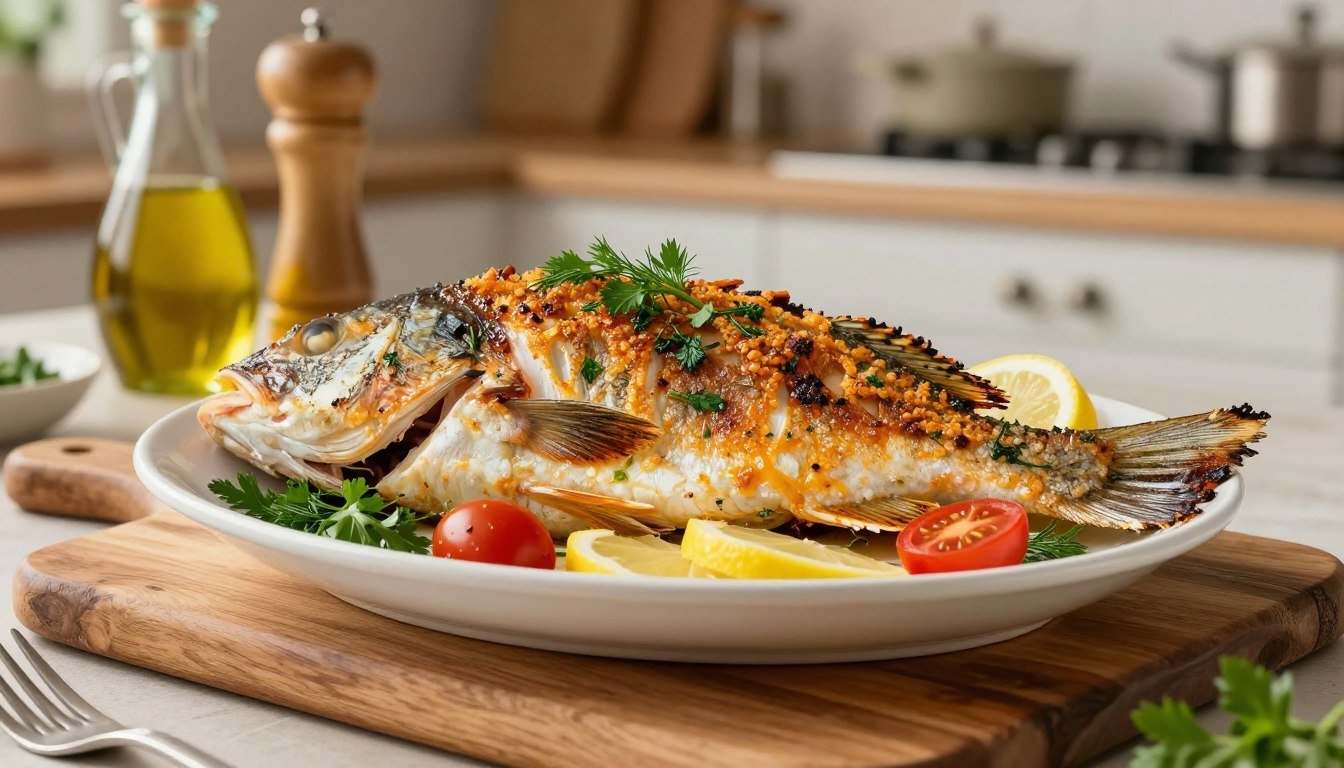
Perfectly Baked Whole Snapper: A Flavorful Seafood Dish
Spread the loveAdding Smoky Elements with Wood Chips or Smoked Paprika Adding smoky elements to your snapper enhances its flavor. You can use wood chips or smoked paprika for this. For a strong smoky taste, use wood chips like alder or applewood. Soak them in water for 30 minutes, then bake them in foil with…
Adding Smoky Elements with Wood Chips or Smoked Paprika
Adding smoky elements to your snapper enhances its flavor. You can use wood chips or smoked paprika for this.
For a strong smoky taste, use wood chips like alder or applewood. Soak them in water for 30 minutes, then bake them in foil with holes. This infuses the fish with a smoky aroma.
Or, sprinkle smoked paprika on the snapper before baking. This adds a subtle smokiness to your dish.
| Technique | Description | Benefits |
| Salt Crust | Baking the snapper covered in a salt mixture | Retains moisture, enhances flavor |
| Citrus and Butter Basting | Brushing the fish with a citrus-butter mixture during baking | Adds flavor, keeps the fish moist |
| Smoky Elements | Using wood chips or smoked paprika to add smokiness | Adds depth, complex flavor profile |
Safety and Storage Guidelines for Your Seafood Dish
To keep your seafood dish safe, it’s important to handle and store it properly. The FDA says safe handling and storage prevent cross-contamination and foodborne illness. This is especially true for seafood like whole snapper.
Proper Handling to Prevent Cross-Contamination
When you handle your oven-baked whole snapper, preventing cross-contamination is key. Start by washing your hands well before and after touching the fish. Use separate cutting boards and utensils for the fish to avoid transferring bacteria to other foods.
Proper utensil and surface sanitation is also critical. Make sure all surfaces and utensils that touch the raw or cooked fish are washed with soap and warm water, then sanitized.
Storing Leftover Baked Snapper Safely
After enjoying your healthy oven-baked snapper, it’s important to store leftovers correctly. Cool the fish to room temperature within two hours of cooking, then refrigerate it promptly. Use shallow, airtight containers to store the fish, keeping it at a consistent refrigerator temperature below 40°F (4°C).
If you don’t plan to eat the leftovers within a few days, consider freezing them. Label and date the containers so you can easily keep track of how long they’ve been stored.