
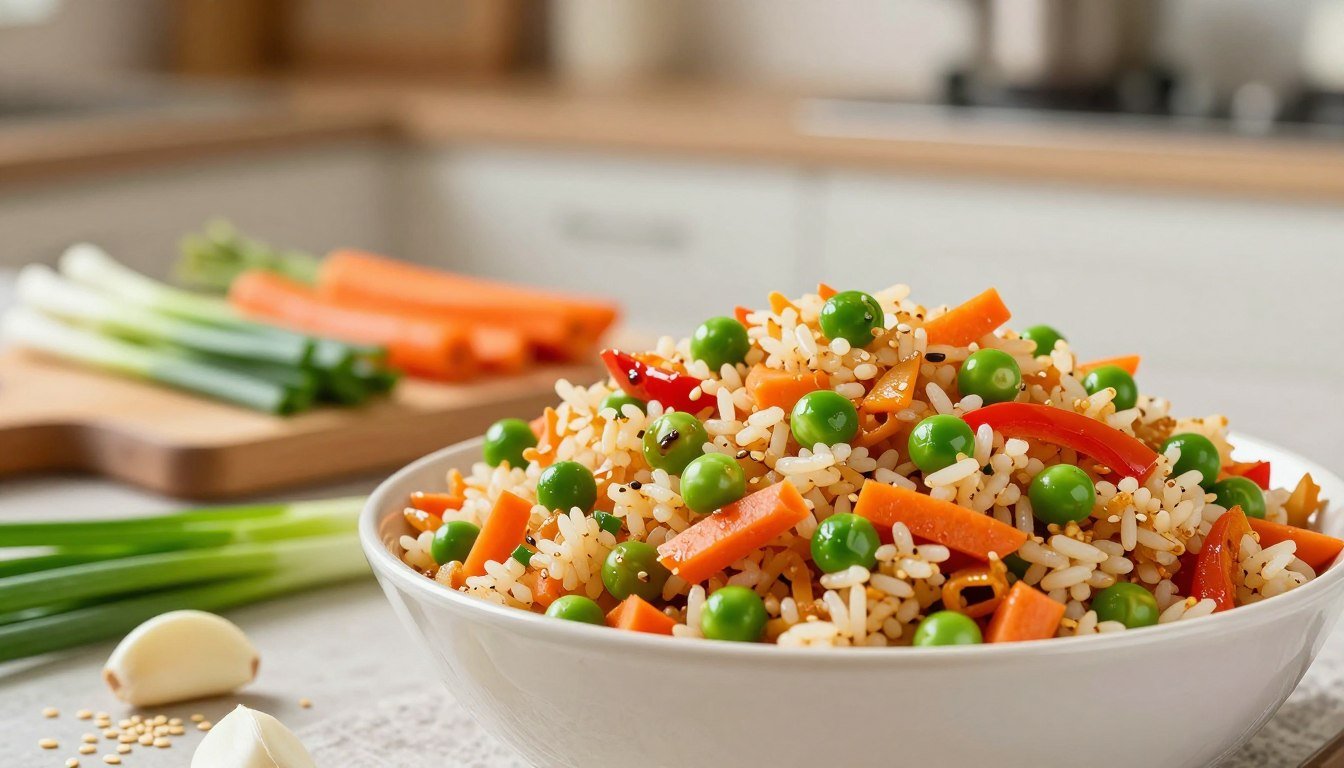
Vegetable Fried Rice Recipe: 10 Easy & Healthy Meals You’ll Love
Spread the loveThis fried rice recipe is perfect for busy days when cooking feels like a burden. You deserve a healthy meal that’s quick, easy, and satisfying. Learning a simple vegetable fried rice recipe can turn basic ingredients into a gourmet meal. You can add fresh produce to make these easy meals your own. It’s…
This fried rice recipe is perfect for busy days when cooking feels like a burden. You deserve a healthy meal that’s quick, easy, and satisfying.
Learning a simple vegetable fried rice recipe can turn basic ingredients into a gourmet meal. You can add fresh produce to make these easy meals your own. It’s the best way to enjoy stress-free weeknight dinners.
This guide shows you how to spice up your cooking with ten unique variations. Whether you like bold spices or crisp textures, you’ll find something to keep your dinners exciting and healthy.
Key Takeaways
- Learn how to prepare a nutritious dinner in under twenty minutes.
- Discover versatile techniques to customize your bowl with seasonal produce.
- Understand the secret to achieving the perfect texture every time.
- Explore ten distinct flavor profiles to keep your menu fresh.
- Save time and money by utilizing common ingredients already in your pantry.
Mastering the Perfect Vegetable Fried Rice Recipe
This vegetable fried rice recipe is all about paying close attention to detail and using simple cooking tips
The success of vegetable fried rice starts with its ingredients and how they’re cooked. Let’s explore the important parts that make your stir-fry a hit.
The Science of Cold Rice
Using cold rice is key for excellent vegetable fried rice. Cold rice, often leftover, is drier and perfect for frying. It prevents the rice from getting mushy or clumping. To get the best results, chill your cooked rice overnight and let it dry out.
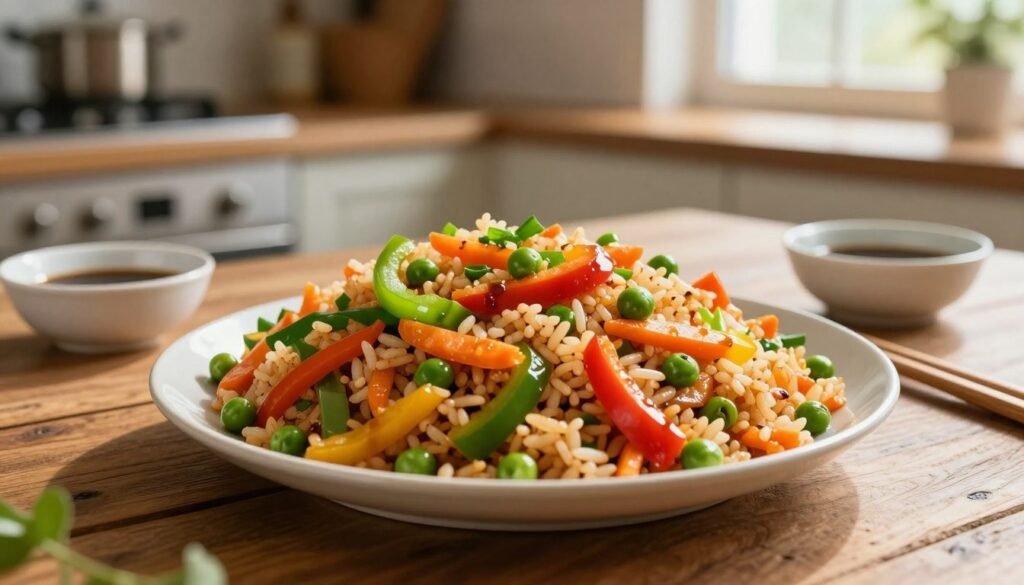
Choosing the Right Aromatics
Aromatics add depth and complexity to vegetable fried rice Recipe . Onions, garlic, and ginger are great choices for flavor. Choose fresh, high-quality aromatics for the best taste. Sauté them in a hot pan with a bit of oil to release their flavors.
Balancing Your Sauce Ratios
The sauce is what holds vegetable fried rice Recipe together. A balanced sauce ratio is essential for the right consistency. A mix of soy sauce, oyster sauce (if using), and sesame oil is ideal. Start with a small amount of sauce and adjust to taste, ensuring the rice is coated but not too wet.
Mastering these elements will help you create a delicious and visually appealing vegetable fried rice dish. Try different ingredients and sauces to find your favorite Fried rice recipes.
Essential Kitchen Tools for Stir-Frying
Learning to stir-fry starts with the right tools. The right tools make cooking easier and improve your dish’s taste. For vegetable fried rice Recipe , the right tools can take your cooking to the next level.
Selecting the Ideal Wok or Skillet
Choosing between a wok and a skillet depends on your cooking style. A wok’s deep sides are perfect for stir-frying, making it easy to mix ingredients. If you don’t have a wok, a large skillet works well too.
Think about the material when picking. Carbon steel or cast iron woks or skillets are best. They keep heat well and reach the high temperatures needed for stir-frying.
Why Heat Control Matters
Controlling heat is key in stir-frying. Quick heat changes prevent burning and ensure even cooking. Gas stoves are great for stir-frying because they heat up fast.
Using a heavy-bottomed wok or skillet helps with heat distribution. This reduces the chance of hotspots that can burn your food.
Safety Tips for High-Heat Cooking
High-heat cooking needs safety focus. Clear your cooking area and have a safe spot for utensils. Use a long-handled spoon or spatula to avoid burns.
Key Safety Considerations:
- Keep a fire extinguisher nearby.
- Never leave cooking unattended.
- Use protective gear like oven mitts when handling hot pans.
| Tool | Purpose | Material Preference |
| Wok or Skillet | Primary cooking vessel for stir-frying | Carbon Steel or Cast Iron |
| Long-handled Spoon/Spatula | For stirring and flipping ingredients | Heat-resistant materials (e.g., stainless steel, silicone) |
| Cutting Board | For preparing ingredients | Wood or Plastic |
Step-by-Step Preparation Guide
Let’s get into the step-by-step guide for making perfect vegetable fried rice. We’ll cover preparing ingredients, the cooking sequence, and seasoning. These steps will help you make a great dish.
Preparing Your Ingredients
First, get all your ingredients ready. Chop your veggies, measure sauces, and make sure your rice is ready. Proper ingredient preparation makes cooking easier.
Start by chopping onions, garlic, and ginger finely. Then, cut your mixed veggies into small pieces. Having everything prepped makes cooking fun and efficient.
The Cooking Sequence
The cooking sequence is crucial for vegetable fried rice. Heat your wok or skillet over high heat. Add oil, swirl it, then add aromatics. Stir-fry until fragrant.
Then, add mixed veggies and cook until tender. Next, add cooked rice, breaking clumps with a spatula. Stir-fry until combined.
Push the rice mixture to one side. Crack eggs and scramble them. Mix eggs with the Fried rice Recipe.
Final Seasoning and Garnish
Seasoning is key to flavor. Add sauces to the rice mixture and stir-fry until coated. Taste and adjust seasoning as needed.
Finally, garnish with green onions and sesame seeds. This adds flavor and looks great. Your vegetable fried rice Recipe is now ready to serve.
This dish is not only tasty but also healthy. It’s perfect for a quick, nutritious meal.
Classic Vegetable Fried Rice Recipe Variations
Classic vegetable fried rice Recipe variations are a tasty way to spice up your meals. You can make this dish your own by adding your favorite ingredients. It’s perfect for a quick dinner or a healthy meal prep option.
Garden Fresh Medley
This version is great for using fresh veggies from your garden or market. Add carrots, peas, and corn to the basic recipe. Don’t forget some fresh herbs like parsley or cilantro for extra flavor.
Protein-Packed Tofu Delight
For a protein-rich dish, add marinated tofu to your fried rice Recipe . It not only increases protein but also adds texture. Marinate the tofu in soy sauce, garlic, and ginger for extra taste.
Spicy Szechuan Style
Love spicy food? Try the Szechuan style. Add Szechuan peppercorns and chili peppers for a bold, spicy flavor. This version is perfect for those who like a little heat.
These variations show how versatile vegetable fried rice Recipe can be. Feel free to mix and match ingredients to create your own recipes. Whether you’re in the mood for something light or spicy, there’s a version for you.
Healthy Swaps for Nutrient-Dense Meals
You can make your vegetable fried rice much healthier with a few simple changes. By choosing better ingredients, you can make a meal that tastes great and is good for you.
Using Brown Rice or Quinoa
Switching to brown rice or quinoa is a great way to improve your fried rice Recipe . Brown rice is full of fiber, vitamins, and minerals. Quinoa adds protein and antioxidants. These whole grains make your meal more nutritious and filling.
- Brown rice provides a good source of manganese and selenium.
- Quinoa is a complete protein, containing all nine essential amino acids.
- Both brown rice and quinoa are rich in fiber, supporting healthy digestion.
Incorporating Low-Sodium Alternatives
Reducing sodium in your fried rice Recipe is another smart move. Use low-sodium soy sauce or tamari and watch your salt intake. Fresh or frozen veggies instead of canned ones also cut down on sodium.
Here are some low-sodium options:
- Use herbs and spices to add flavor instead of salt.
- Choose low-sodium broth or stock for added moisture.
- Experiment with citrus juice or vinegar for a burst of flavor.
Adding Fiber-Rich Vegetables
Adding more and different veggies to your fried rice boosts its nutrition. Include a variety of colorful veggies for a wide range of vitamins and minerals. Some good choices include:
- Broccoli, rich in vitamin C and K.
- Carrots, high in vitamin A.
- Peas, a good source of protein and fiber.
By making these changes, you can enjoy a healthier vegetable fried rice. Try different combinations to find your favorite.
Quick Weeknight Meal Planning
Streamlining your weeknight dinner routine is easier than you think. With a few simple strategies, you can make vegetable fried rice a staple in your quick weeknight meals. The key is to plan ahead and prepare ingredients in advance.
Batch Cooking Your Rice
Batch cooking your rice is a game-changer for weeknight meals. Cooking a large batch of rice on the weekend or one day a week can save you time during the week. Simply cook the rice, let it cool, and store it in airtight containers in the refrigerator or freezer.
To make batch cooking even more efficient, consider the following tips:
- Cook rice in bulk and portion it out for individual meals.
- Use a rice cooker or Instant Pot to simplify the cooking process.
- Label and date the containers so you know what you have and how long it’s been stored.
Pre-Chopping Vegetable Strategies
Pre-chopping your vegetables can save you a significant amount of time during the week. Chop a variety of vegetables, such as carrots, peas, and onions, and store them in airtight containers in the refrigerator.
Some effective pre-chopping strategies include:
- Chopping vegetables for the entire week’s meals at once.
- Using a food processor to quickly chop large quantities.
- Storing chopped vegetables in separate containers to maintain freshness.
Storing and Reheating Safely
To ensure your weeknight meals remain safe to eat, it’s essential to store and reheat them properly. When storing cooked rice and vegetables, make sure to cool them down to room temperature within an hour of cooking.
Some key storage and reheating tips include:
- Using shallow containers to cool food quickly.
- Reheating food to an internal temperature of at least 165°F (74°C).
- Consuming reheated food within a day or two of initial cooking.
Flavor Profiles and Global Inspirations
Global inspirations can really boost the taste of your vegetable fried rice Recipe. By adding international flavors and ingredients, you make it both familiar and new. Let’s see how different cuisines can change your vegetable fried rice.
Thai-Inspired Basil Fried Rice
Thai food is famous for its bold tastes and fragrant herbs. To make Thai basil fried rice Recipe , add fresh basil, chilies, and lime juice. It’s all about mixing spicy, sour, and sweet.
- Use Thai basil for its unique taste and smell.
- Add chilies or chili flakes for a spicy kick.
- Incorporate lime juice and zest for a burst of citrus flavor.
Japanese-Style Garlic Fried Rice
Japanese food is all about simplicity and quality ingredients. For Japanese garlic fried rice Recipe , use top-notch garlic and soy sauce. Add shiitake mushrooms for more flavor.
Key ingredients include:
- High-quality garlic, preferably Japanese for its mild taste.
- Japanese soy sauce or tamari for a rich umami taste.
- Shiitake mushrooms for their earthy flavor and texture.
Korean Kimchi Vegetable Fusion
Korean kimchi is famous for its bold, sour, and spicy flavors. Adding kimchi to your vegetable fried rice Recipe gives it a unique twist. Choose kimchi that’s ripe and has a good balance of flavors.
Tips for incorporating kimchi:
- Use kimchi that’s not too old, as it can be overly sour.
- Balance the spiciness of kimchi with other ingredients like carrots or peas.
- Add a sprinkle of toasted sesame seeds for added crunch and flavor.
Common Mistakes to Avoid
To make great vegetable fried rice Recipe , avoid common mistakes. These can ruin the dish’s texture and taste. Even with the best ingredients and tools, bad technique can still lead to poor results.
Preventing Mushy Rice
One big problem with vegetable fried rice Recipe is getting mushy or soggy rice. This usually happens when the rice isn’t cooked or cooled right before frying. Use day-old rice that’s been chilled overnight. This makes the rice dry enough for frying.
Also, don’t stir the rice too much. Gentle stirring keeps the rice grains whole. If using fresh rice, spread it on a baking sheet to cool quickly and stop cooking.
Avoiding Overcrowding the Pan
Another big mistake is overcrowding the pan. This can cause uneven cooking and a steamed, not fried, texture. To avoid this, cook ingredients in batches if needed. This lets each part cook evenly.
- Cook protein and harder vegetables first, as they need more time.
- Add quicker-cooking vegetables later to keep them crunchy.
- Stir-fry rice in a hot pan with enough oil to prevent sticking.
Managing Oil Temperatures
It’s crucial to manage the oil temperature for a perfect stir-fry. Too hot oil can burn your food, while too cold oil makes it greasy and undercooked. The best temperature varies by oil type, but medium-high heat is a good start.
To see if your oil is ready, look for a shimmering surface or use a thermometer. Once it’s hot, add your ingredients and stir constantly. This spreads the heat evenly.
Customizing Your Fried Rice for Dietary Needs
It’s easy to make vegetable fried rice fit your dietary needs. You can make it gluten-free or vegan with a few tweaks. This dish is very versatile and can be tailored to your taste.
Gluten-Free Modifications
For those with gluten issues, making gluten-free vegetable fried rice Recipe is simple. Just make sure your soy sauce or stir-fry sauce is gluten-free. Use gluten-free soy sauce or tamari instead. Also, check the ingredients of any spice blends or sauces you add.
Key gluten-free modifications include:
- Using gluten-free soy sauce or tamari
- Checking the ingredients of pre-made spice blends
- Avoiding cross-contamination with gluten-containing ingredients
Vegan and Plant-Based Adjustments
Vegan and plant-based diets are easy to follow with vegetable fried rice. Since it’s already plant-based, focus on adding ingredients that fit your diet. Replace eggs with tofu scramble or skip them. Make sure your seasonings and sauces are animal-free.
Consider these vegan and plant-based adjustments:
- Using tofu scramble instead of eggs
- Selecting plant-based seasonings and sauces
- Incorporating a variety of colorful, plant-based vegetables
Low-Carb Cauliflower Rice Options
For low-carb diets, cauliflower rice is a great choice. Just pulse cauliflower florets in a food processor until they look like rice. Then, sauté them with your favorite vegetables and seasonings.
Benefits of using cauliflower rice include:
- Significantly reduced carbohydrate content
- Increased nutrient density with more vitamins and fiber
- A delicious, low-carb alternative that still satisfies your fried rice cravings
Conclusion
Learning to make vegetable fried rice Recipe is easy. You can now make many healthy meals. This guide has shown you how to prepare this versatile dish.
The secret to great vegetable fried rice is using cold rice and the right sauce. Also, picking the best aromatics is key. Try new ingredients and methods to find your favorite flavors.
Now, you can make vegetable fried rice Recipe your way. You can use brown rice or quinoa and choose low-sodium options. This makes your meals even healthier.
With more practice, you’ll get better at making tasty vegetable fried rice. You’ll make dishes that you and your family will love.
FAQ
Why is using chilled rice essential for a vegetable fried rice recipe?
Cold, day-old rice is key. It’s drier and starches have changed. This keeps your rice firm and stops it from getting mushy. If you’re short on time, freeze fresh rice for 15 minutes to get the same effect.
How can I ensure my vegetable fried rice remains healthy while still being flavorful?
Use healthier rice like Bob’s Red Mill Organic Quinoa or brown rice. This adds fiber. For less sodium, try Kikkoman Less Sodium Soy Sauce or San-J Tamari. Adding lots of veggies like broccoli and bell peppers makes the dish more filling without extra calories.
What are the most common mistakes to avoid when stir-frying?
Don’t overcrowd the pan. This lowers the temperature and steams your food instead of searing. Cook in batches. Also, use oils like avocado or grapeseed that can handle high heat.
How do I incorporate global flavors like Thai or Korean into my fried rice?
For Thai Basil Fried Rice Recipe , add fresh Thai basil and lime juice at the end. Korean Kimchi Fusion adds chopped kimchi and Gochujang paste for spice. Japanese Garlic Fried Rice uses toasted garlic and Mizkan Seasoned Rice Vinegar for a rich flavor.
Can I make a low-carb version of this vegetable fried rice recipe?
Yes. Use cauliflower rice instead of regular grains. Cook it quickly over high heat to keep it crunchy. This fits Paleo or Keto diets while keeping the dish tasty.
You can also explore this recipe:
What is the best way to store and reheat leftovers for meal planning?
Store in airtight Glasslock containers in the fridge for up to five days. Reheat in a skillet with Kadoya Sesame Oil for better texture than the microwave. This keeps your food fresh and flavorful all week.
Which aromatics are essential for a professional-grade flavor base?
Start with garlic, ginger, and scallions, the “holy trinity” of stir-fry. Sauté them in oil to release oils that flavor the whole dish. Adding shallots or white pepper adds more depth.