
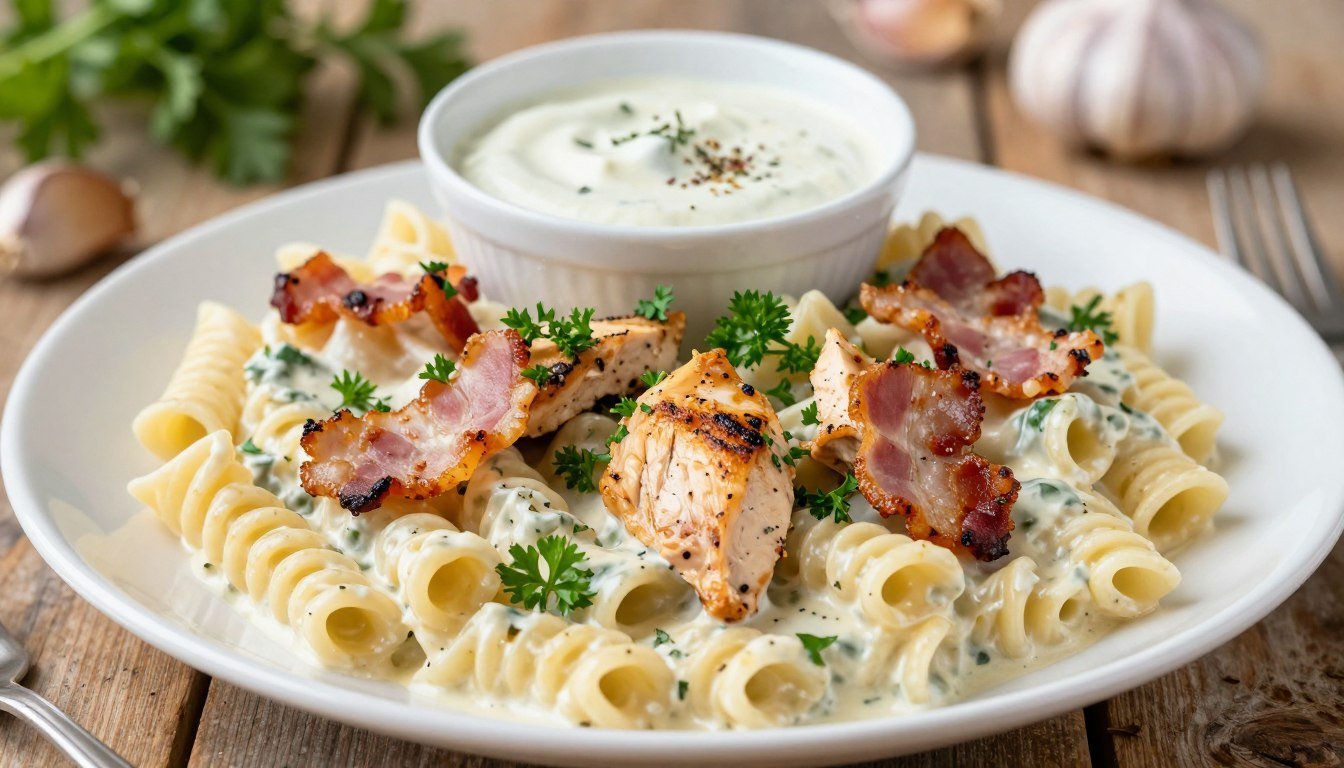
Easy Chicken Bacon Ranch Pasta Recipe (Ready in 30 Minutes)
Best Practices for Refrigeration
Storing your meal right is key to keeping it safe and tasty. Never leave your pasta out at room temperature for more than two hours to avoid bacterial growth.
- Transfer the pasta into airtight containers to lock in moisture and prevent odors from the fridge.
- Allow the dish to reach room temperature before sealing the lid to avoid excess condensation.
- Store your leftovers in the refrigerator for up to three days for the highest quality.
How to Reheat Without Breaking the Sauce
Reheating creamy pasta can be tricky. High heat often causes the sauce to separate. To get the best chicken bacon ranch pasta when reheating, use a gentle touch.
If you are using a stovetop, add a small splash of milk or chicken broth to the pan before heating over low flame. This extra liquid helps emulsify the sauce again, restoring its original silky texture.
If you prefer the microwave, heat the pasta in short intervals of 30 seconds, stirring thoroughly between each cycle. Avoid high power settings, as they can quickly overheat the dairy and cause the sauce to break.
Common Mistakes to Avoid When Making This Recipe
Even a simple pasta dish can go wrong if you’re not careful. Small mistakes can ruin your dinner. Knowing these common errors can help you make a perfect meal every time.
Preventing Overcooked Pasta
One big mistake is overcooking your noodles. Pasta should be al dente, firm to the bite. If it’s mushy, it’s overcooked.
Start checking your pasta two minutes before it’s done. Drain it right away when it’s just right. It will cook a bit more when you mix it with sauce.
Avoiding Sauce Separation
A creamy sauce is key in any easy chicken bacon ranch pasta recipe. But it can break if the heat is too high or if you mix things wrong. This makes the sauce grainy or oily.
Lower the heat before adding ranch and cheese. A little pasta water can help the sauce stay smooth. Patience is your best tool for a great sauce.
“Cooking is a craft that relies on the balance of heat and timing; master these, and you master the kitchen.”
— Anonymous Chef
